





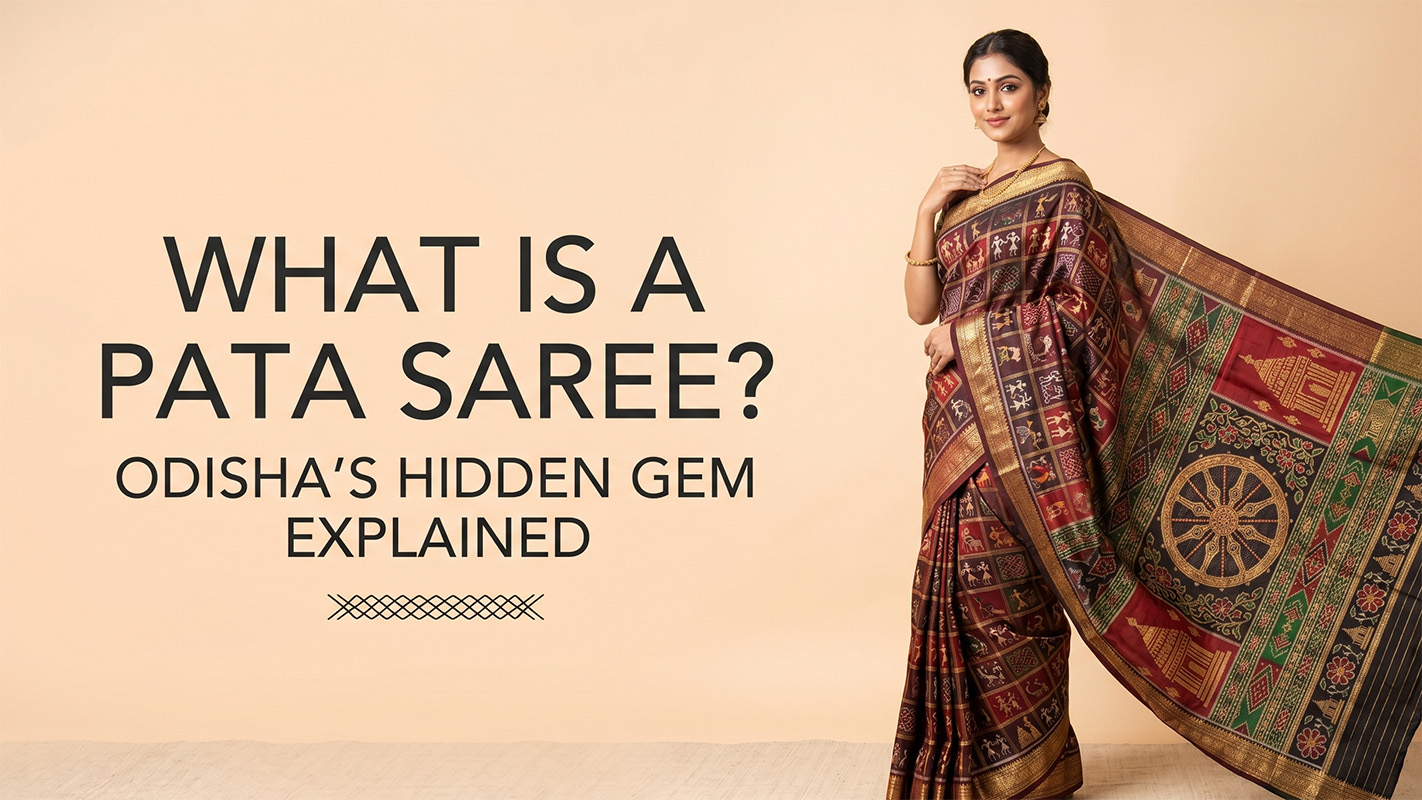
When we talk about the rich textile heritage of Odisha, one name that quietly stands out is the Pata Saree. Elegant, lightweight, and deeply rooted in tradition, this saree is truly a hidden gem that deserves more attention in today’s fashion world.
What is a Pata Saree?
A Pata Saree is a traditional hand-woven saree from Odisha, crafted primarily using fine cotton or silk threads. The word “Pata” refers to cloth or fabric, but in Odisha’s weaving culture, it represents a unique style of saree known for its smooth and shiny texture, durability, and subtle elegance.
These sarees are often:
- Soft and breathable
- Lightweight for daily wear
- Designed with minimal yet artistic patterns
Origin & Cultural Significance
Pata sarees are deeply connected to Odisha’s weaving clusters, especially in regions like:
They reflect the essence of Odisha’s handloom tradition, where every thread tells a story of craftsmanship passed down through generations.
A. Western Odisha – Core Pata Belt
This is the heart of Sambalpuri Pata saree production.
Key districts:
- Sambalpur
- Bargarh
- Subarnapur (Sonepur)
- Balangir
- Boudh
These regions produce the famous Sambalpuri Bandha (Ikat) Pata sarees, where both warp and weft threads are tie-dyed before weaving.
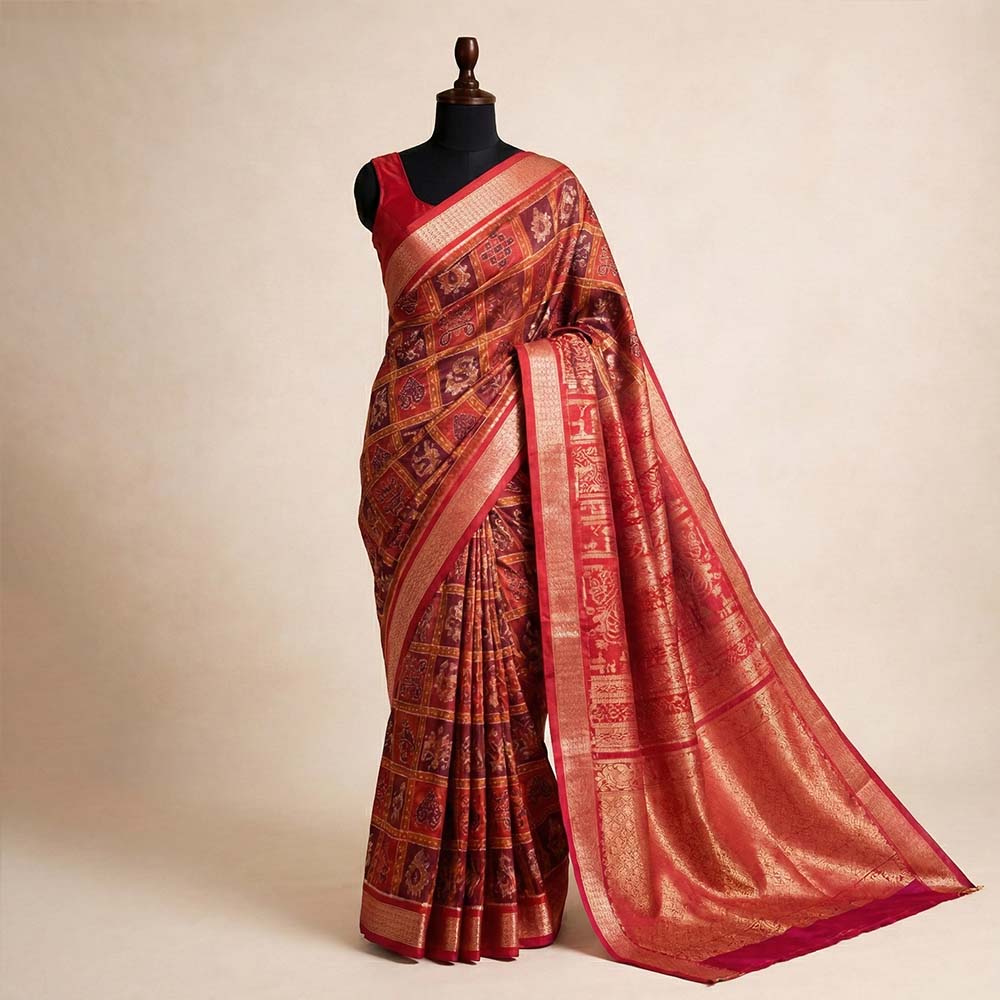
Varieties from here:
- Pasapali
- Bomkai (Sonepuri style)
- Barpali Pata
B. Cuttack Region – Traditional Khandua & Maniabandha Pata
Key areas:
- Nuapatna
- Maniabandha
- Tigiria
- Narasinghpur
Varieties from here:
- Khandua Pata sarees (used in Jagannath Temple rituals)
- Kumbha Butti Pata
- Ikat sarees with Gitagovinda motifs
- Fine silk and cotton Pata weaving traditions
C. Berhampur (Ganjam District) – Silk Pata Hub
- Famous for Berhampuri Patta (Berhampur silk sarees)
- One of the earliest GI-recognized silk sarees of Odisha
Varieties from here:
- Pure silk Pata
- Temple border designs
- Heavy traditional weaving
Design & Weaving Style of Pata Sarees
A Pata saree stands out for its quiet elegance, where beauty comes from balance rather than excess. The borders are usually refined and architectural, often drawing inspiration from the structured forms seen in temples like the Jagannath Temple. Instead of being heavy or ornate, these borders gently frame the saree, giving it a sense of rhythm and dignity.
The body of the saree is typically solid or dual-toned, allowing the richness of color to take center stage. Rather than dense decoration, motifs are used sparingly—small traditional elements like conch or floral forms placed with intention, creating space and visual calm. This restrained approach is what gives the saree its timeless and versatile appeal.
What truly defines a Pata saree is its weaving. In many cases, especially in Sambalpuri styles, the Ikat (Bandha) technique is used, where threads are tie-dyed before weaving begins. This requires careful planning and skill, resulting in softly defined patterns that feel organic and handcrafted. Even simpler Pata sarees rely on precise weaving, producing a smooth texture and a graceful fall.
Overall, a Pata saree reflects a design philosophy rooted in subtlety—where every element is thoughtfully balanced, and elegance is achieved through simplicity, craftsmanship, and cultural depth.
Why Pata Sarees Are Special
In a world dominated by fast fashion, Pata sarees stand out because they are:
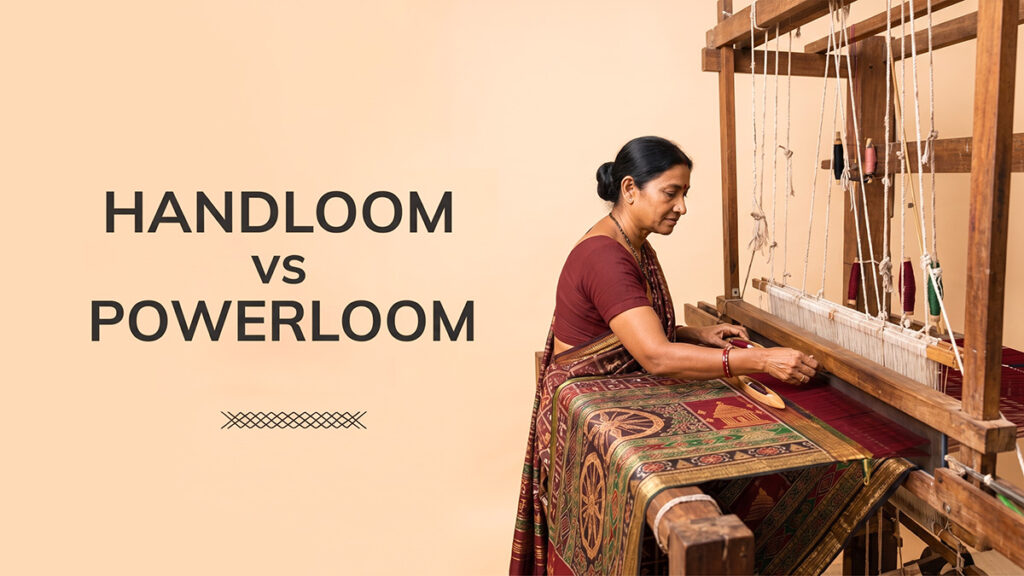
- Handwoven with care — each Pata saree is crafted slowly on the loom, carrying the skill and dedication of artisans, making every piece unique
- Sustainable and eco-friendly — made using traditional techniques and natural fibers, promoting mindful, long-lasting fashion over mass production
- Rich in heritage and authenticity — deeply connected to Odisha’s cultural roots, with influences from traditions around places like the Jagannath Temple
- Versatile in styling — can be draped for both modern and traditional looks, suitable for everyday wear, office, or festive occasions
- More than fabric — each saree represents a story, preserving the identity, craftsmanship, and timeless elegance of Odisha
Each saree is not just fabric—it’s a piece of Odisha’s identity.
Pata Saree Wash Care Guide
- First wash: Dry clean only – Especially important for silk Pata and Ikat (Bandha) sarees to preserve color and structure
- Gentle hand wash (after first few uses) – Use cold water with mild detergent—avoid harsh chemicals
- Do not soak for long – Ikat-dyed threads may bleed slightly; quick wash is best
- Wash separately – Dark and dual-tone Pata sarees can release color in initial washes
- Avoid bleach & strong detergents – These can damage fibers and fade traditional dyes
- Dry in shade only – Direct sunlight can dull the richness of colors
- Do not wring harshly – Gently squeeze water to maintain fabric strength
- Iron on low to medium heat – Prefer ironing on the reverse side, especially for silk
Pro Tip (For Premium Care)
For pure silk Pata, especially heritage weaves, stick to dry cleaning to retain shine and longevity.
🌸 Final Thoughts
The Pata Saree is a beautiful reminder that elegance doesn’t need to be loud. With its subtle charm and cultural richness, it represents the soul of Odisha’s weaving tradition.
At Odiani, we celebrate such timeless weaves—where every saree is woven by hand and draped in love 🧡.